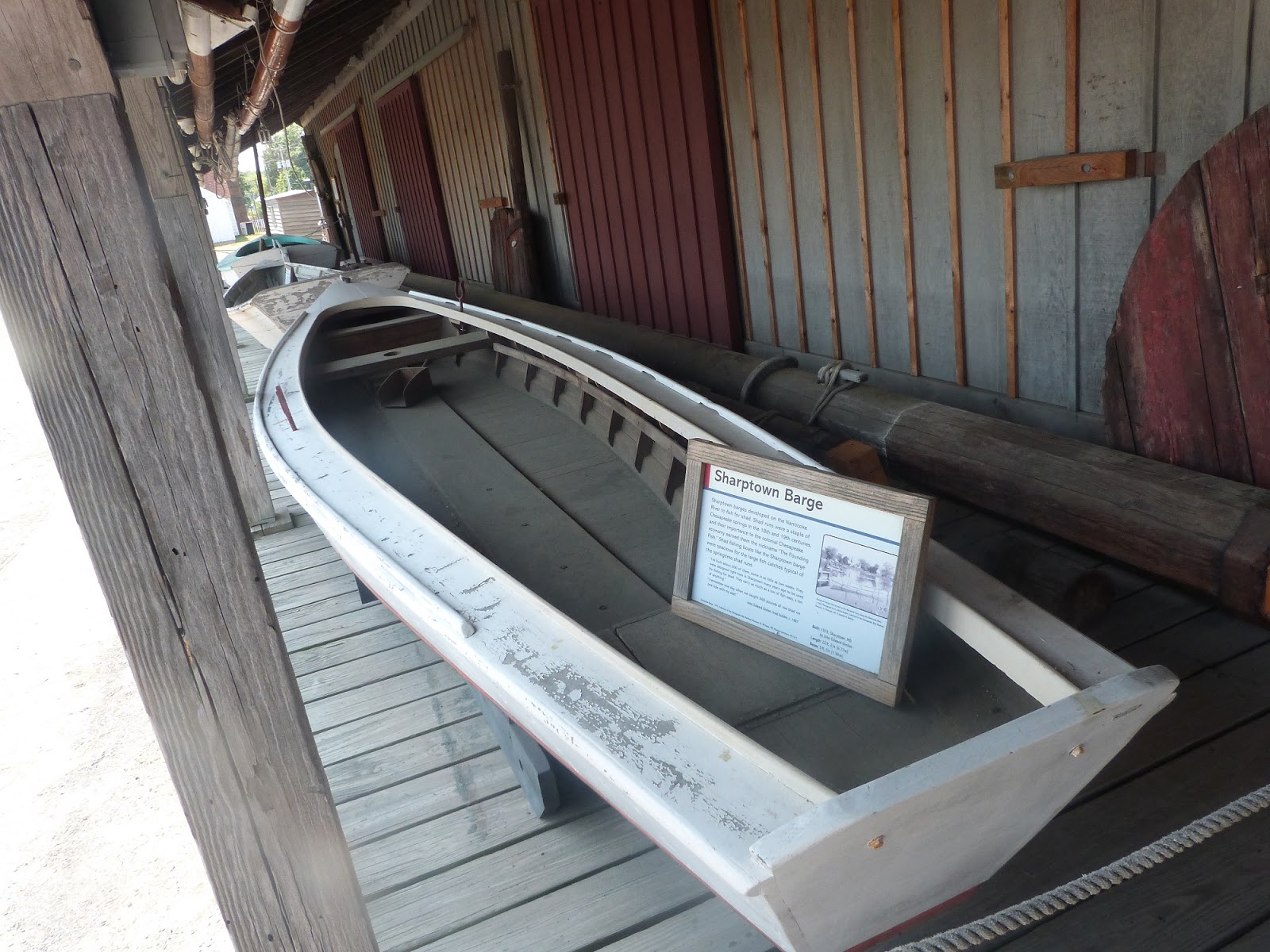
Wooden boats at St Michaels


A pusher boat - massive engine used to push the sailboat when engines were allowed to be used - the dredging for Oysters had many strange rules, such as you had to use sail only for 5 days a week but could use the pusher on the other days! the small boat could be hoisted aboud the bigger craft.


The inside workshop


America is blessed with many varieties of wood available in significant quantity. Britain and Ireland did have lots of Oak, and to be fair some other woods, but Scotland and in particular Shetland had little. I recall seeing cargo manifests in a Shetland Museum that listed "flat pack boats being delivered from Norway to Shetland as deck cargo. Boats such as sixereens and foureens were built like Ikea kits - hundreds of years ago, since there weren't enough trees in Shetland. Wood is used everywhere in the states - Docks and houses, roof "slates" as cedar shingles and of course wooden boats! In my later visits to Mystic Seaport boatyards and Museums I see how raw logs arrive at the "boatyard" and the complete planks, frames and knees are cut from scratch.


To build wooden boats you needed to understand everything about wood.


Designs were also in attendance - I will subscribe to an American magazine when I return home - that specialies in Wooden boats.


As well as the boat shed inside there were skilled staff working on bigger projects outside.
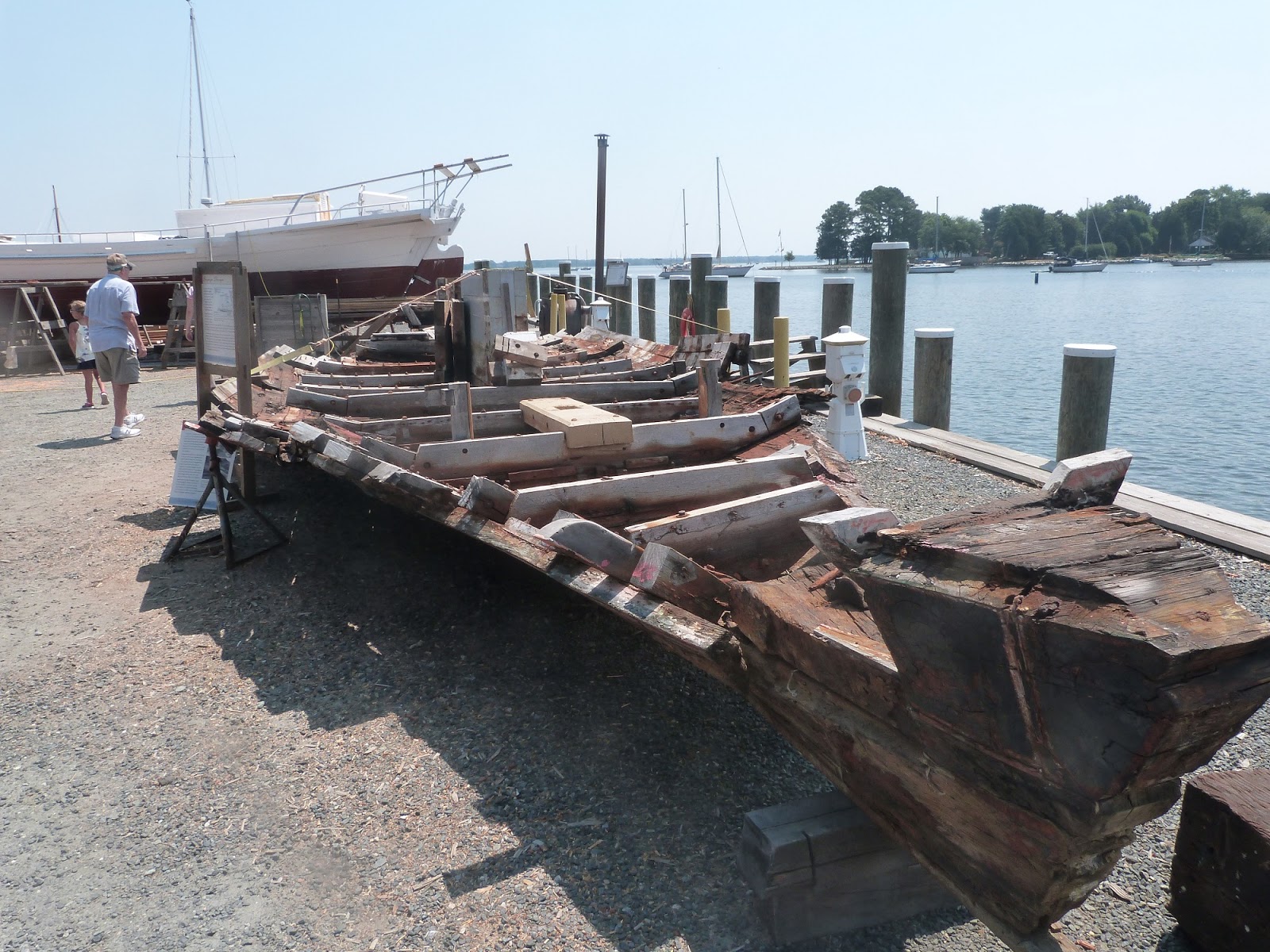


These remenants of a boat could be described as a good do-er upper project! In the old days they laid complete logs down as the starting point, When wrecks were dug out of nud, or even brought to the yard after decades sitting in rain sometimes not much was left. They are foing to rebuild this boat! It will almost be as old as a ballymena hammer - you remember that one? it was really old, it has had three new heads and 4 new shafts.


The birds like this one!


Quite a few old wooden boats went out on the water too - you could pay for a trip around the bay, the boats were busy day and night.


Canoes and "duck boats" were also in evidence - for hunting.


Oyster tongs


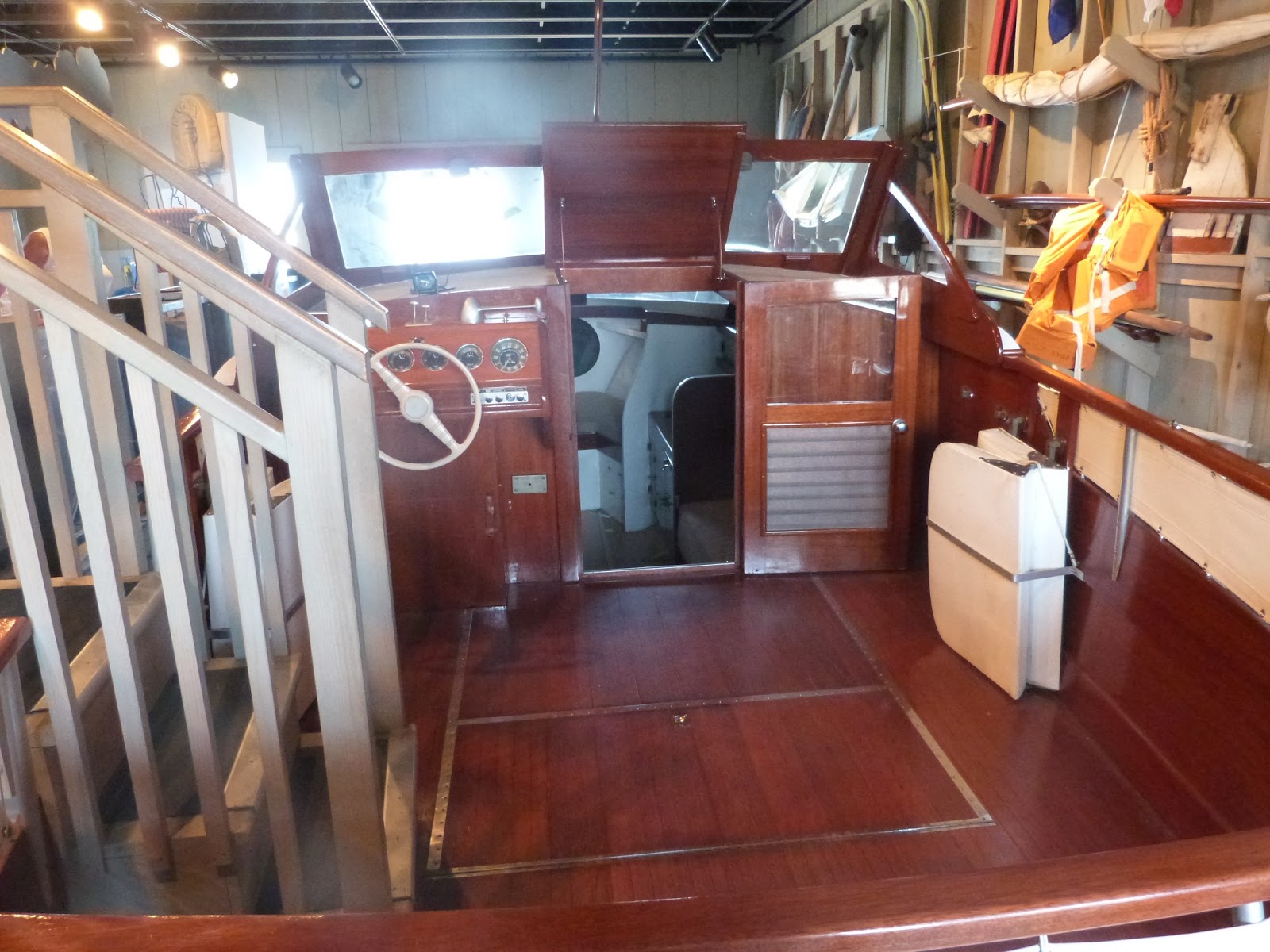
All that Varnish, a labour of love.


Sorry for the patchy nature of this blog, it is really just an aide memoire for what I saw.


Visiting St Michaels (9495)


Shirley and I after a thunderstorm has passed, you can get 1 to 3 inches of rain in an hour here - and wind that would scare you. This doesn't happen until we are ready to leave St Michaels - we spend two days here.

We anchor off the museum and go to their dinghy dock, the museum has many boats that I photograph - I have placed these in a separate blog because not every reader will find them as interesting as me and anyway each blog entry has a limit to the number of photographs I can upload.
The Museum also has a lighthouse despite being at the head of a bay - they dismantled it and transported it from the middle of Chesapeake bay to dry land,


Above the 6 screwjack legs is a three story hexagonal building. The jacking system makes the lighthouse able to withstand sea ice. Shirley loves it - maybe we get buy Angus Rock...


None about now, remember DDT and "The Silent Spring" - a most poignant book ( birdlife dies when eggshells went super thin due to accumulation of DDT toxins)


A handy way to hoist stuff up from a boat.

There were a lot of these types of lighthouses


Mind you the next photo shows the number of shipwrecks in Chesapeake bay, maybe they didn't have enough lighthouses?


The view from the top was good - note where the shipwrights are working..


That;s Shadowmere to the left.

St Michaels is popular for lunch too - here is a stream of powerboats coming in at 1pm.


The museum had placed seats under the lighthouse - blessed shade and breeze, we eat our packed lunch.


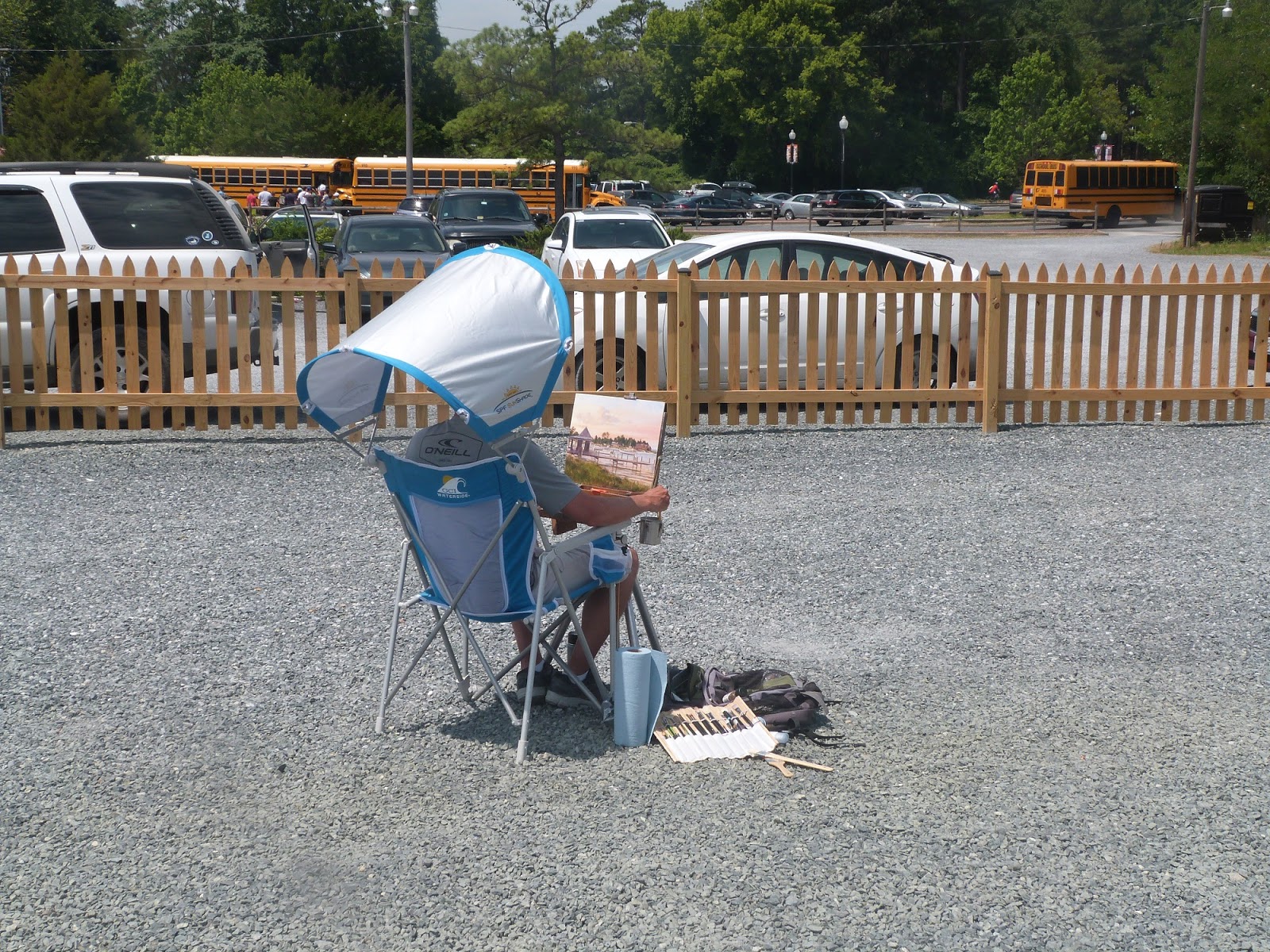
We also see another artist in the rather cool chair below - we end up buying a couple of these in Baltimore! I hope it is sunny enough when I get them home.


The was a considerable acreage to the museum - men working rebuilding old wooden boats, old buildings and a further museum within the museum documenting the history of the Bay.


And of course you can have your wedding here too,


I remember seeing an original seagull engine in a glass case in the Manor Hotel in Fermanagh  - I guess some of these are the American equivalents.

I also remember sailing around Ireland with Jim Stewart and Eaman McManus in Jim's 22 foot yacht, powered with a (under) 1 HP Seagull with a highly polished Brass fuel tank.

Motorboating is big business here - more so than yachting. Lots of harbours and docks have only 5 feet of water.


Funnily enough I see a sketch of someone that resembles my brother


A motor yacht was also up for display


Rather gorgeous if you like that sort of thing. Outside a pilot boat was sitting in some concrete on dry land, for kids  I guess


There was an Oyster museum too


The season for Oysters and the seasons for Crab didn't overlap so the boats often did both.


Women had jobs on shore "shucking" oysters. The dredgers stayed out in the bay and other boats brought the catch in for shucking and tinning. Mothers of course had to multi-task as usual.


There were examples of workers houses .


And waterman's shanty huts


Before visiting the boat yard we take a walk through the town and have an ice-cream. The town is small but made up of pleasant old buildings, a main street with some shops - leaning towards expensive things to buy, and as usual it is hard to buy a loaf of bread.


Small blocks of residental houses


I did like their porches and the garden scupltures on this one


We return to the boat and have a shower.


There are showers down below but using the cockpit one is less messy, even if it does scare the natives.

I now lift the tender aboard using a new "Handy-Billy" (A four to one purchase that every bosun needs)


Easy as pie.  We are beset upon by a thunderstorm and I decide to stay in the cockpit with the engine in gear at idle speed  - we are near shallows, the wind hits 40 knots plus and the rain drops visibility to a few hundred yards - that is, if you can manage to open your eyes in the onslaught


After it passes I decide we will up anchor and move a few miles up to a more sheltered spot - on the Wye river, we had been told it was most a  beautiful anchorage and so it proved perfect for an overnight stop, we then head to North the following day.

The "St Michael boats" Blog just lists mainly photographs of boats (and plaques describing them) - have a look if you are interested. The next sailing blog is "The McGothy River and Baltimore"